Prayer
Catholic Prayers for Anxiety: Short Prayers for When Your Mind Won't Rest
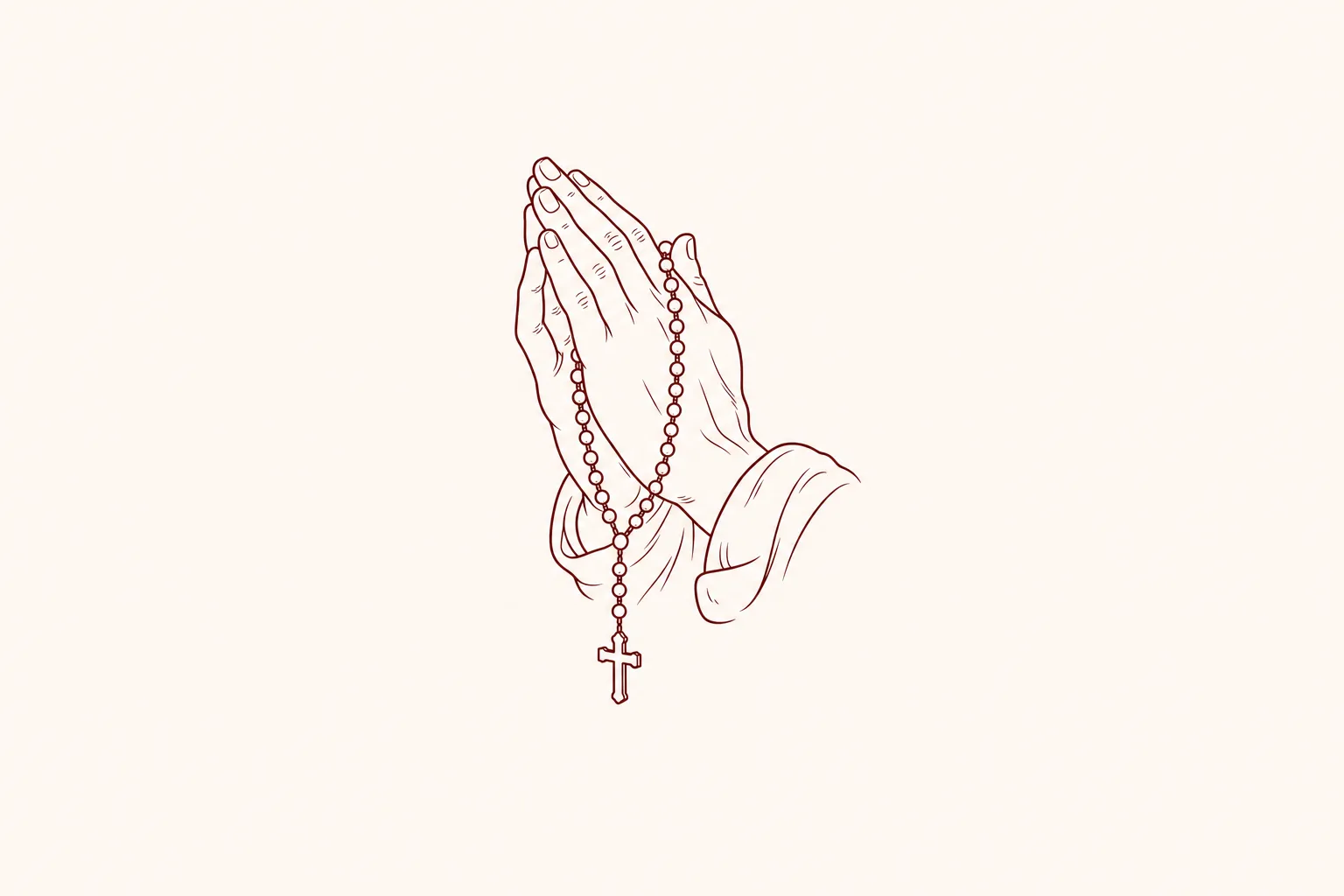
If your chest is tight and your thoughts won’t slow down, you don’t need a long prayer right now. You need a few words you can hold onto. Start here:
Jesus, I trust in you.
Say it slowly. Say it again, even if you don’t feel it yet. Below are a few more Catholic prayers for anxiety, each with where it comes from, so you know you’re praying words the Church has prayed for a long time.
Anxiety, depression, and getting help
Before the prayers, one honest thing. Anxiety disorders and depression are real health conditions, not a sign that your faith is weak. Prayer is good for you, but it doesn’t replace care. If anxiety is getting in the way of sleep, work, or daily life, talk to a doctor or a counselor. Catholics do this all the time, and many therapists will respect your faith.
If you are in crisis or thinking about hurting yourself, call or text 988 (the Suicide & Crisis Lifeline in the US) right now. You can pray after. You can pray while you wait.
A short prayer from Scripture
St. Paul wrote this to the church at Philippi, from prison:
“Have no anxiety at all, but in everything, by prayer and petition, with thanksgiving, make your requests known to God. Then the peace of God that surpasses all understanding will guard your hearts and minds in Christ Jesus.” (Philippians 4:6–7)
It can sound like a command you’re failing at. Read it again. Paul doesn’t say “stop feeling anxious and then come to God.” He says bring everything to God, and the peace comes after. You can turn it into a prayer by naming what you’re carrying:
Lord, here is what I’m afraid of. I’m making it known to you. Guard my heart and my mind.
And when you only have one breath of prayer in you, St. Peter’s line is enough:
“Cast all your worries upon him because he cares for you.” (1 Peter 5:7)
The Memorare
The Memorare is one of the most loved prayers to Mary, and people have turned to it in fear for centuries. It’s often credited to St. Bernard of Clairvaux, but it actually grew out of a longer prayer from the 1400s. A French priest named Fr. Claude Bernard spread it widely in the 1600s, which is probably where the mix-up came from.
Remember, O most gracious Virgin Mary,
that never was it known that anyone who fled to your protection,
implored your help, or sought your intercession,
was left unaided.
Inspired by this confidence,
I fly unto you, O Virgin of virgins, my Mother.
To you do I come, before you I stand, sinful and sorrowful.
O Mother of the Word Incarnate,
despise not my petitions,
but in your mercy, hear and answer me.
Amen.
If you’ve been looking for a prayer to Mary for anxiety, this is the one most Catholics reach for. It doesn’t ask you to feel calm first. It just asks you to run to her.
”Jesus, I trust in you”
These five words come from St. Faustina Kowalska, a Polish nun. In her Diary, she records Jesus asking her in 1931 to have an image painted with the words “Jesus, I trust in You” at the bottom (Diary, 47). It became the Divine Mercy image you’ve probably seen in a parish.
It works as a breath prayer. Breathe in on “Jesus.” Breathe out on “I trust in you.” Some days it will feel true. Some days you’ll be saying it because you want it to be true. Both count.
What the Church says about worry
Jesus talks about worry directly in the Sermon on the Mount. He points to the birds and the wildflowers and asks, “Can any of you by worrying add a single moment to your life-span?” Then: “Do not worry about tomorrow; tomorrow will take care of itself” (Matthew 6:27, 34).
The Catechism reads that passage as an invitation to trust, not a scolding. Jesus “is not inviting us to idleness, but wants to relieve us from nagging worry and preoccupation” (CCC 2830).
That’s worth sitting with. Trusting God doesn’t mean anxiety will disappear because you prayed hard enough. It means you don’t have to carry it alone. The feeling may stay for a while. You can still hand it over, again and again.
If you want a prayer written for what you’re carrying today, Grace can help.
Questions people ask about praying with anxiety
Is there a short Catholic prayer for anxiety? Yes. “Jesus, I trust in you,” from St. Faustina’s Divine Mercy devotion, is five words long and can be prayed with your breath. 1 Peter 5:7, “Cast all your worries upon him because he cares for you,” is another short one.
Is it a sin to feel anxious? No. Anxiety is a feeling, and often a health condition, not a choice to distrust God. In Gethsemane, Jesus himself “began to be troubled and distressed” (Mark 14:33). What matters is bringing the anxiety to God, and getting help when you need it.
Which saint do Catholics pray to for anxiety? There’s no official patron saint of anxiety. By tradition, many Catholics ask St. Dymphna, long honored as a patron of people with mental and nervous illness. Many also turn to Mary through the Memorare.
Can prayer cure anxiety or depression? Prayer can bring real comfort and peace, but it isn’t a replacement for medical care. The Church has never asked people to choose between faith and treatment. If anxiety or depression is affecting your daily life, talk to a doctor or counselor, and in a crisis call or text 988 in the US.
What is a good prayer to Mary for anxiety? The Memorare is the prayer most Catholics turn to. It asks Mary to hear and answer you, and reminds you that no one who has fled to her protection was left unaided.
Sources
- St. Faustina Kowalska, Diary: Divine Mercy in My Soul, 47
- Philippians 4:6-7 (NABRE)
- 1 Peter 5:7 (NABRE)
- The Memorare: origins of the prayer (Aleteia)
- Matthew 6:25-34 (NABRE)
- Catechism of the Catholic Church, 2830
- Mark 14:33 (NABRE)
- Saint Dymphna, patron saint of mental illness (Catholic Answers)